Friday, September 29, 2006

IN MEMORY


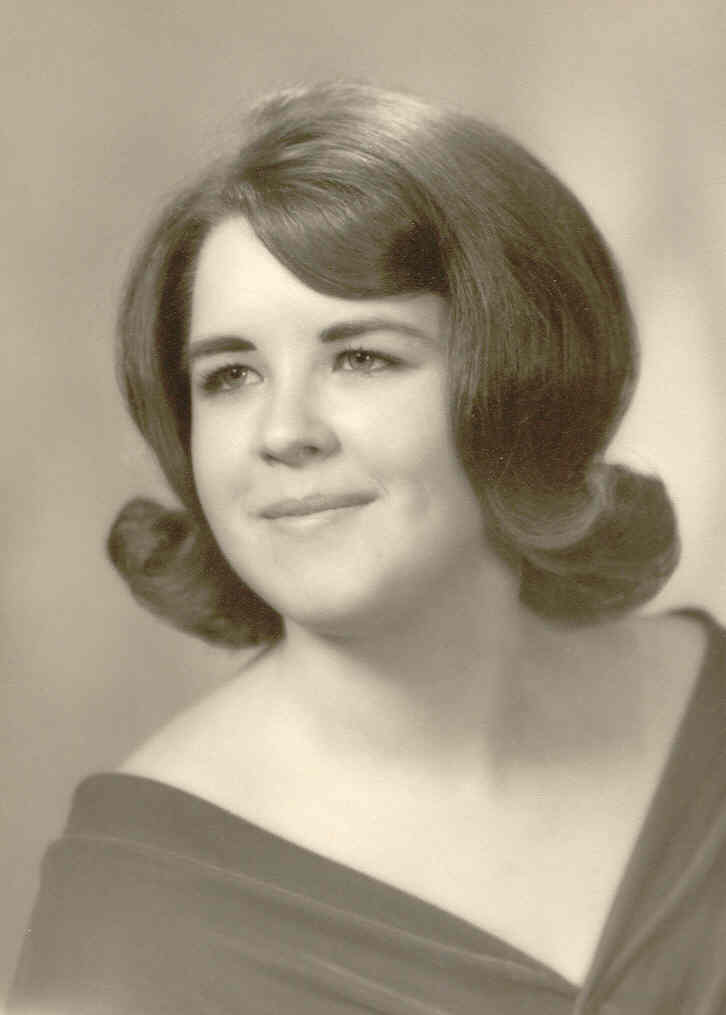
Sandra Lee Lindsey
March 4, 1942-September 20, 2006
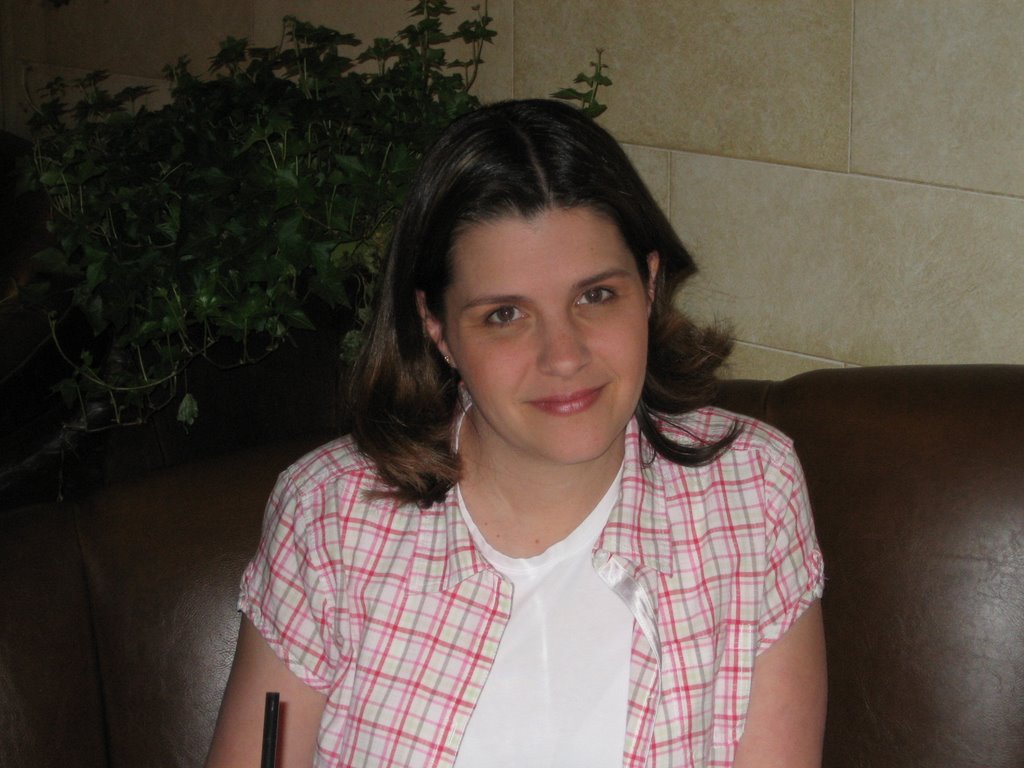
My mother died last week.

Already, I feel the need for a qualifier. Yes, Sandra Lee Lindsey was my mother. She conceived me in Pittsburgh, gave birth to me in Oregon, and took good care of me the nine months in between. But two days after my birth, she signed the papers that relinquished her parental rights and sent me to my own adored family. The family I grew up with, the family I know best, the family who will always and forever be mine.

But that would never have happened--I would never have happened--without Sandi being my mother first. In one of the very first letters she sent me after I located her four years ago, she wrote, "I have always said you were my gift to the world, and the best thing I've ever done."

That's no small praise, considering the brilliant and accomplished woman she was. Over the years, Sandi acquired a bachelor's, master's, and doctorate in English. She taught college English and writing for fifteen years. After that came a master's degree in Theology, including a semester spent at Notre Dame. At the age of 57, she received her Juris Doctorate from Lewis and Clark Law School in Portland, Oregon.
The first week of law school in 1995, Sandi was diagnosed with rheumatoid arthritis. Her graduation four years later was the last time she walked. By the time I met her in 2002, she was mostly confined to bed with occasional forays in a wheelchair. She endured years of crippling pain, surgeries and hospitalizations with grace and optimism. Until this last year, she never talked about "if" she would walk again, it was always "when."
She was hospitalized this summer with pneumonia, where doctors discovered she had rheumatoid lung disease. It's a terminal complication of her illness, with no treatment except comfort care. I've made the twelve-hour drive to Portland three times in the last six weeks--once to take her four grandchildren to see her one last time, once to bid her goodbye as she started drifting quickly away, and a week ago to speak at her funeral.
I've returned home with a trunk full of books, papers, notes from the classes she taught, her dissertation, both masters' theses, letters, pictures, and journals. Sandi is gone, but she lives in me and in my children and in generations yet to come.
Thank you for my life, Mother.

Tuesday, September 12, 2006

August Reads

TO DARKNESS AND TO DEATH by Julia Spencer-Fleming: the fourth in the mystery series featuring Clare, an Anglican priest, and Russ Van Alstyne, the married police chief she feels more than polite friendship for. Spencer-Fleming did something unique with this book--it takes place entirely within one day. An heiress has gone missing in the November woods. Hunters and search and rescue are on the lookout for her, while the foundation she has willed her family's land to is wondering if she'll return in time for the night's signing ceremony at the local resort. Spencer-Fleming deals with enviromentalism, logging, hunting, kidnapping, and corporate greed without going overboard on any one element or pushing a particular moral conclusion. Still, this was not my favorite of the series. I was a bit too aware of the artificial, which is to say fictional, structure of this mystery-in-a-day. But I like the characters and I'm eagerly awaiting the next in the series.

NEGOTIATING WITH THE DEAD by Margaret Atwood: the subtitle is "A writer on writing." I love Atwood's novels, particularly ALIAS GRACE and THE BLIND ASSASSIN, and I liked this book. Rather than a traditional how-to-write or this-is-how-I-write book, Atwood deals with rather more ephemeral questions about writers and art. Chapter headings include "Orientation: who do you think you are?", "Dedication: Apollo vs. Mammon, at whose altar should the writer worship?", and "Communion: the eternal triangle--the writer, the reader, and the book as go-between".

THE DARK BACKWARD by Julia Buckley: a contemporary mystery/thriller that opens with a compelling prologue in which police officer Lily Caldwell sees the face of her attempted killer during the few minutes that she is clinically dead. After losing her job and her husband over her stubborn refusal to drop it, Lily is threatened again when new evidence arises against the man she believes killed her partner and tried to kill her--the governor. I would have liked the setting to be more detailed and grounded, rather than just the generic "Capitol City", but Lily is a fiesty and memorable character against which some of the other characters, unfortunately, are not as fully realized.

AN APRIL SHROUD, A PINCH OF SNUFF, and A KILLING KINDNESS by Reginald Hill: three of the earlier entries in the Dalziel/Pascoe mystery series set in Yorkshire. Having come upon this series late in the game, I'm catching up a few at a time and thoroughly enjoying each outing of these memorable policemen. Hill writes wonderful characters and tricky plots and it's not knocking these books to say that he has gotten better and better over the years.

THE STRANGER HOUSE by Reginald Hill: a recent stand-alone from the Dalziel/Pascoe author, this book was utterly brilliant. The Stranger House in question is a guesthouse in Northern England which finds two determined researchers on its doorstep on the same weekend. Sam Flood is a take-no-prisoners mathematical genius from Australia who's trying to find out how her 13-year-old grandmother came to be pregnant years ago in this village and then shipped out to the nuns in Sydney. Miguel is a Spanish almost-monk who has just lost his calling to the priesthood and, while waiting to see what God wants him to do next, continues his research into the Elizabethan persecution of Continental priests. The plot is intricate, winding its way from past to present until Sam and Miguel find their stories are part of the same whole. Stunning, beautiful, absolutely recommended.

SONS OF DESTINY by Darren Shan: I've covered this pretty well in my entry on endings. Loved this YA series about a half-vampire boy and the vampire/vampaneze war waged on the edges of our own world, but hated the ending of the series. The author pulled the rug out in the last chapter of this book and ruined an otherwise great series for me.

THE VIRGIN OF SMALL PLAINS by Nancy Pickard: read this after numerous recommendations on DorothyL and I'll be forever grateful that I did. Seventeen years ago, in the midst of a Kansas blizzard, a young woman is found dead in the snow. Since then, the grave of the unidentified girl has become a place of pilgrimage for the ill and suffering. But who is she? What happened the night of her death? Why did 17-year-old Mitch Newquist leave home the next day? What secret are the town judge, sheriff, and doctor hiding? When Mitch returns home suddenly, long-silent questions are asked and long-hidden secrets are revealed, leading up to the truth about the Virgin of Small Plains. An absorbing book that I finished in almost one reading. Highly recommended.

NO NIGHT IS TOO LONG by Barbara Vine: I thought I'd read everything by Vine/Rendell, but found this little gem and devoured it whole. Behind his quiet, unremarkable life, Tim Cornish hides a dreadful secret: he killed a man. Or did he? As Tim writes out his confession, we begin to suspect that not everything is as it seems. A beautiful little novel with wonderful structure that will keep the reader guessing about the outcome until the very last page.

THE SPARROW by Mary Doria Russell: this may just take over POSSESSION as my favorite book of, well, ever. In the year 2019, a message in music is received from the Alpha Centauri system. Without fanfare or notice, the Jesuits send their own exploratory party: four priests, a doctor and her husband, an engineer, and a computer expert. In 2059, the sole survivor of the expedition has returned to earth accused of terrible crimes. A novel of friendship, love, exploration, wonder, fear, and faith--if you shrug aside this book because it's found in the science fiction section, you'll be missing out on a experience that cannot be duplicated. Read it!
Friday, August 11, 2006

WHY MYSTERIES?
Why do I read them, why do I write them?
The second question is the most easily answered--I write what I like to read. I've been a fan of mysteries since my childhood, beginning with the inimitable titian-haired sleuth, Nancy Drew. Also the Hardy Boys, Trixie Belden, Cherry Ames, the Bobbsey Twins and, when I'd devoured those, I moved on to Agatha Christie.
But the turning point in my love affair with mysteries was my senior year of college. For my senior seminar, I chose The Mystery Novel. We read far and wide across the genre. I read Dame Agatha and Ross McDonald and Ellery Queen. I was introduced to the historical mystery with Ellis Peters and Anne Perry. I fell in love with Peter Wimsey and his Harriet in BUSMAN'S HONEYMOON. I met John le Carre through THE SPY WHO CAME IN FROM THE COLD. I felt the delicious creepiness of Henry James' TURN OF THE SCREW and threw myself into 19th-century Russia in Dostoyevsky's CRIME AND PUNISHMENT.
Last night, I dug out a paper I wrote for that class, most impressively titled "Moral Complexity in the Mystery Novel." I had hoped to find some profound line or paragraph, something I could use as a springboard for this post, but I'm afraid what I discovered is that, when I was in college, I wrote like I was in college. Not bad, you understand--I did get an A on the paper--but nothing terribly insightful or original. So I'm left to my own devices to explain why I read mysteries.
I read mysteries for the characters. The inherent tensions in a criminal investigation goes a long way to revealing characters--and character. I'm not a puzzle fan. I don't read for the intellectual element of trying to figure out what happened. I read to find out why and how it effects those involved. I read for motivation and resolution and judgment and mercy. I don't require happy endings--only satisfying ones. An ending in which loose ends have been collected and unanswered questions are rare.
An ending, in short, which only exists in fiction.

Monday, August 07, 2006

JULY READS

WIDE SARGASSO SEA by Jean Rhys: a re-read for book club. It’s the story of Bertha Antoinette Mason, the mad wife in the attic from JANE EYRE. Part I is her childhood in the West Indies, with a dangerously unstable mother and personal poverty. Part II is the story of her marriage to Rochester, the well-blooded but unmoneyed Englishman who’s been lied to about his intended bride and her family. Part III is a brief look at the events in JANE EYRE through Antoinette’s eyes. I love this book, probably even more this time than when I first read it in college. It changed the way I read all books—now I’m always aware of the untold stories hovering behind the corner of every book I read.

GREGOR AND THE MARKS OF SECRET by Suzanne Collins: the fourth in the Overlander YA series. Jacob’s a big fan, and I’ve followed right along with him. In this installment, Gregor gets swept along as Luaxa tries to discover what’s happening to the Underland’s mice population. By the time the book ends, war is no longer threatening but at the very doorstep of the human’s kingdom in the Underland. A well-realized fantasy, with unique features and compelling characters. Can’t wait for the next one.

BIRDS OF A FEATHER by Jacqueline Winspear: the second in the Maisie Dobbs mystery series, set in 1930 in a London that is still dealing with the devastating effects of WWI. The mystery of three dead women leads Maisie back into the early days of the war—the “feather” referenced in the title is the white feather that some women handed out to men in England who were not in uniform, a mark of cowardice and a means of trying to guilt them into the military. I love Maisie herself and Winspear is a master of setting, class, and characters of the time-period. I’d love to do half as well as she has done in this series.

CHARLIE BONE AND THE HIDDEN KING by Jenny Nimmo: another YA fantasy, about children in England endowed with gifts as diverse as calling up storms, talking to animals, and learning about people by touching clothing. This is the fifth in the series and Charlie Bone, whose father disappeared when he was a baby, is dealing with other crises in his home. From his mother’s bewitchment by a sorcerer to his grandmother being frozen and left in the bathtub until they can figure out to thaw her, Charlie and his friends search for the Red King himself, who has spent a thousand years in the form of a tree. Not as good as Harry Potter, but intriguing enough to have kept me reading thus far.

PAST POISONS edited by Maxim Jakubowski: a collection of mystery short stories, all historical. I read it for obvious purposes. There were several standouts, including Anne Perry’s tale of Scotland’s Queen Gruoch, also known as Lady MacBeth. A pleasant way to spend research time and see what can be accomplished in the short form of historical mysteries.

DECLARE by Tim Powers: A book I picked up on recommendations from DorothyL. In 1963, Andrew Hale is 40-year-old English tutor at Cambridge. But one phone call pulls him back into the world of British Intelligence which he served throughout WWII, ending on Mount Ararat in 1948 with the death of a team he’d led up the mountain to kill a colony of djinn. A combination spy thriller/paranormal story, with the real-world figure of British double agent Kim Philby playing a key role, I loved everything about this book. This is a fabulous, fabulous book that I would recommend to anyone.

PEACE LIKE A RIVER by Leif Enger: a bestseller upon publication in 2001, this is still a popular book-club choice (which is why I read it.) Eleven-year-old Reuben Land is the narrator and, as he calls it, the witness of his father’s miracles. This book has everything: a shooting that may or may not have been self-defense, a little sister who writes epic Western ballads about a cowboy named Sunny Sundown, a father who performs actual miracles, a posse searching the Dakota Badlands in the middle of winter, and a penultimate chapter that left me in tears. Highly recommended.

Titles and Friendships

I have the best circle of friends in the world. Women who are my sisters in every sense but blood . . . and being adopted, I don't rate blood all that highly. We are known amongst ourselves and to our significant others as The Bluestocking Posse.

I've never had friendships that merited a title before. The posse bit came first. One night, one of the husbands said, with a tinge of awe and/or fear in his voice: "They're like a gang!" We thought gang didn't have quite the connotations that we as women of wit and elegance were going for, so we chose posse instead. A posse of six, ready to ride at the drop of a hat and the sheriff's call. To bring in dinner, to decorate houses in celebration, to attend funerals and lend books and make costumes and watch children and show up uninvited with candy and shoulders ready to be cried on.

Bluestocking was my contribution to the title. Several years ago, my neighbor e-mailed my husband with a definition from one of those word-of-the-day calendars. "Bluestocking: a woman of intellectual or literary interests." As the neighbor said in his e-mail: "That's Laura." I am not immune to flattery and I can think of worse "B" words to be called. Thinking of myself as a bluestocking was a balm against long suburban days of homework and laundry and piano practice. It gave me permission to take my literary interests seriously, both reading and writing. And I thought it sounded really cool in connection with posse--and so the title was set.

Naming my first book was much harder. For a long time I called it LAMENTATION without being entirely happy about it. Then one day I was reading the Book of Common Prayer, 1662 edition, doing research into the Anglican service for the dead. There's a beautiful passage that reads: "I held my tongue and spake nothing, I kept silence; yea, even from good words, and it was pain and grief to me." From that, a title was born--KEPT SILENCE.

The best titles, like the best friendships, are magical, hinting at the depths to be found if one is brave enough to open the cover. My titles, like my books, may never be counted among the best.

But my friendships are.

Thursday, July 27, 2006

More than anyone ever wanted to know about me . . .

Number of husbands: one

Number of children: four (3 boys, 1 girl—ages 5 to 13)

Daily goal: to have the same number of husbands and children at the end of each day that I had at the beginning

Best thing about 2006: a tie between our Africa trip in June and my baby starting kindergarten

Favorite book: yeah, right, like I can pick one! So we’ll subdivide the topic . . .

Favorite mystery: a duo by Elizabeth Peters, THE FALCON AT THE PORTAL/HE SHALL THUNDER IN THE SKY

Favorite historical novel: a quartet by Ellis Peters (no relation to above) about the last true prince of Wales in the 12th –century, THE BROTHERS OF GWYNNED QUARTET

Favorite fantasy other than the obligatory LOTR: Juliet Marillier’s DAUGHTER OF THE FOREST

Favorite mainstream novels (afraid to use the very loaded term "literary"): A. S. Byatt's POSSESSION

Favorite non-fiction: READING LOLITA IN TEHRAN by Azar Nafisi

Favorite classic: Charlotte Bronte’s VILLETTE

Authors whom I always buy in hardback: Ruth Rendell, P.D. James, Elizabeth George, Elizabeth Peters, Minette Walters, Juliet Marillier, J.K. Rowling (I think that last goes without saying!)

Favorite film in the last year: tough call, what with GOBLET OF FIRE and NARNIA, but I’m going to have to go with the film Orson Scott Card called the “best sci-fi film ever made”—SERENITY

Favorite TV show ever: the too brief, brilliantly written, superbly acted, emotionally resonant 15 episodes of FIREFLY

A brief history of my writing (all-too brief as of yet): I've had one short piece accepted for publication in an anthology titled LETTERS TO MY MOTHER. I also have a drawerful of rejections, ranging from form letters to cutting indictments to encouraging optimism. Last year I submitted an alternate-history novel to several publishers and that's where the encouragement came in--though no one was encouraging enough to want to see the entire manuscript. I've just submitted query packages on a mystery novel, KEPT SILENCE, set in 1899 Yorkshire. Below is my query letter blurb that makes it sound like I'm writing late-Victorian soap opera.

QUERY: In the summer of 1899, Susannah Garrett returns from four years of medical school to her Yorkshire home in order to marry her cousin, David. When she discovers a girl’s body the very hour of her return, a cascade of secrets begins to unravel—from David’s involvement with the dead girl to the mystery of Susannah’s sister who vanished without a trace seven years before. Inspector Simon Grey tries to focus on investigating the murder at hand, but his heart has its own secrets and time is running out to reveal them before Susannah’s wedding. In a world balanced between past traditions and future possibilities, Susannah and Simon both work to uncover the secrets long since kept silent.

WHEW! To anyone who made it this far, congratulations. I wish I had a prize to offer, but the satisfaction of a good deed accomplished shall have to be your reward. Now that we've covered me, I'll turn my attention in future to topics of (perhaps) more general interest.